Wednesday, June 04, 2008

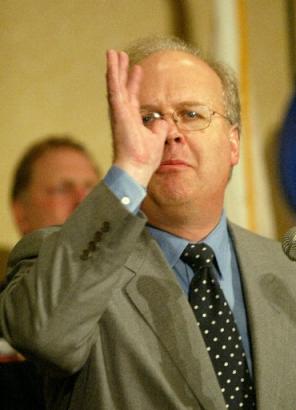
MACP Steals A Page from Karl Rove's Playbook

The Moroccan-American Comittee for Policy (MACP), a lobbying group funded by the King of Morocco, has scored two media coups recently against the Polisario Front, leaders of the Western Saharan independence movements. The first was a highly uncritical post from the Associated Press that would have failed any Journalism 101 student. The second is a more recent article in the New York Times that places more doubt upon the subject.

Brining a half dozen alleged victims of abuses in the Sahrawi refugee camps in Algeria to the US and the UN headquarters, MACP has revved up its campaign to discredit Polisario morally. These defectors -- who have essentially become paid lobbyists for Morocco and whose word is to be trusted at that level -- are claiming a whole range of misdeeds at the hands of Polisario.

This new media campaign suggests that Morocco is increasingly frustrated with the peace process and is launching a new offensive to build support for unilateral autonomy.

What is more interesting, though, is that these smear tactics reek of Carl Rove, the largely discredited (if highly successful) former political advisor to President George W. Bush. How so?

Attack your opponent where he is strongest and you are weakest.

In 2004, Rove used this tactic against Sen. John Kerry's war record in Vietnam, which was clearly a lot more stellar than Bush's cushy time in the National Guard. Indeed, there was clear evidence that Bush had been derelict in his duties. But after being 'swift boat-ed', there was an air of doubt clouding Kerry's claims to being a morally superior Commander and Chief by virtue of his war service. Now we all know that these attacks against Kerry were false, libelous and distracting. But they worked. Their effect was to strip the Democratic Nominee of his one claim to moral superiority over Bush: he had actually fought in war and thus could responsibly manage the war in Iraq.

Now the same is being played out in Western Sahara. In this case, for Polisario, their strongest suit is, and always has been, international law and human rights. Amnesty International, Human Rights Watch, the UN's High Commissioner for Human Rights and High Committee for Refugees, International Red Cross/Red Crescent and dozens of other NGOs (including a permanent presence of English teachers from the US and a Moroccan journalist) have all stayed in the Polisario controlled camps and never found any evidence supporting the claims now being launched by Morocco's surrogates. But that doesn't matter. Rove's tactics -- whether insinuating Sen John McCain had an African-American love child in 2000 or Kerry was a French-speaking effete with a trumped up war record in 2004 -- are based on alleging. It is the allegation that matters: placing doubt in the back of the mind.

The flip-side of this tactic is to distract people from the reality. For a self proclaimed 'war president', Bush's war record was non-existent. That's why Rove went after Kerry's military service: to distract.

The parallel with Morocco is quite telling. The world knows that Morocco's human rights record in Western Sahara is among, as Freedom House puts it, the 'Worst of the Worst'. At home and in Western Sahara, Morocco has a long history of brutally repressing opposition, whether by 'disappearing' dissidents (in the days of King Hassan II) or imprisoning them en mass as the new king does with Islamists and Western Saharan nationalists.

Year after year, report after report, it becomes clear and clearer that Morocco's occupation of Western Sahara is one of the world's most neglected human rights situations in the world. And this is exactly why MACP is attacking Polisario on its human rights record. In reality, everyone knows that Polisario is very careful about its international image and has gone to great lengths to be transparent, even opening themselves up to attacks like the 2003 France Libertés incident.

Meanwhile Morocco continues to prohibit free expression, movement and organization in Western Sahara, and repeatedly ejecting journalists from the territory who attempt to uncover these facts without supervision from the interior ministry.

If Morocco is to sell the world on the idea that it should keep Western Sahara through autonomy, then it has to distract the world from its human rights record there. And the best way to achieve unilateral autonomy solution is to discredit Polisario in the eyes of Washington through Rove's masterful 'guilt by doubt' association.

But will the AP and NYT send reporters to the occupied Western Sahara and the camps to see for themselves? Probably not.

Saturday, May 24, 2008

Van Walsum: Nobody's fool

If you thought things couldn't get much worse for the peace process in Western Sahara, then you haven't read the latest interview with Peter van Walsum, the lead UN negotiator to the conflict.

What's refreshing is that Van Walsum finally calls a spade a spade. The much hyped face-to-face talks in 2007 and 2008 -- the first since 2000 -- have been 'a mockery, a farce, a false game', he says, explaining that nobody believes in them, neither Morocco nor Polisario.

'If I continue to sit here as a good boy and do what is expected of me then I will mediate in not four rounds, but eight, twelve or sixteen rounds. There is no solution, because the two main points of view of the parties are irreconcilable on the point about a referendum concerning independence. For Polisario that is essential and for Morocco it is unthinkable. You will never resolve that problem.'


Last month, Van Walsum jumped into some hot water when he pointed out the banal yet uncouth reality that unless France and the United States will it, a referendum on independence in Western Sahara is unrealistic. Morocco and its allies quickly affirmed the consequent, arguing that if independence is unrealistic, then autonomy must be realistic.

Polisario's response was to claim that Van Walsum should not longer play a role; yet the liberation front has not yet said whether or not it will attend the unscheduled next round of negotiations.

In the interview, Van Walsum seems unsure as to whether his tenure in Western Sahara is over, noting the deep displeasure of Polisario and Algeria. More interestingly, he also noted some tensions in the UN Secretariat

Perhaps the most interesting observation to come from Van Walsum's new intereview is his belief that the UN Security Council should have used Chapter VII powers (ie, coercion) to stop Morocco's 1975 invasion of what was then the Spanish Sahara. Indeed, he notes that the Security Council treats the Chapter VI (ie, non-coercive) nature of its intervention in Western Sahara since 1988 as 'holy'. In other words, it's not just Morocco and Polisario who have 'red lines' in this conflict, but also Paris and Washington.

In the NRC interview, he further clarified his position, which is clearly empathetic towards Western Sahara's right to independence: 'The moral dilemma is that Polisario is more on the right side than Morocco. But because the Security Council will never force Morocco into a referendum on independence, they actually choose for the status quo'. He then criticizes Polisario for choosing exile over autonomy.

Though he could have just as easily redirected his frustration at France and the United States, who are not only blocking a solution in accordance with international law, they are also providing diplomatic cover to Morocco's forceful expansion of territory. Are not they as guilty, if not more, of prolonging the refugees misery as Polisario?

Indeed, at the end of the article, he endorses the idea of the Security Council asking the parties to 'experiment' with autonomy. Such an approach, which clearly favors Morocco, would require the Security Council to use Chapter VII powers to make sure his autonomy experiment doesn't end up like West Papua or Eritrea.

So this is the world we live in: In the same interview, a lead UN negotiator simultaneously acknowledges Western Sahara's right to independence and the illegality of Morocco's annexationist move. Only to conclude by suggesting that the Security Council -- in the name of realism! -- should force Western Sahara to accept, for a brief trial period, an illegal occupation.

Well, such audacity is clearly Van Walsum's swan song. Before the UN Secretariat unceremoniously snatches the Western Sahara dossier from Van Walsum, our little-known Dutch diplomat is letting the world know that he's nobody's fool -- neither Morocco's, nor Polisario's, nor the United Nations'.

It was a good 3 years, as long as you weren't a Sahrawi.

Wednesday, May 07, 2008

Alle's comments on 'Resolution 1813: Casus Belli? Apparently Not'

[Alle] ... the meaning of the year-long extension is also that this was the last push within the UN for autonomy before the Bush admin moves out of office and that the US & France combined couldn't (or wouldn't) get any further than an oblique reference to realism and some non-binding praise for Morocco's plan, while self-determination is kept with zero change of wording. In that sense, it's a pretty comfortable place in which to dig in for Polisario and Algeria, compared to the alternatives. (Although of course much worse than c. 2004.)

The point is that the US cannot now push the process further under this presidency, on the UN/intl law track. This forces Morocco to take the initiative itself, before the elections, if they don't want to gamble on the next president being prepared to go further than Bush did.

The PJD recently called for the government to start implementing the autonomy initiative unilaterally; that is an interesting proposition, and perhaps the gov is also prepared to do something along those lines. Not sure it's a smart thing to do overall, though, since autonomy would then appear in all its messy reality, rather than remaining a 'daring' future prospect -- presumably it would also somewhat empower Sahrawis in the territories to organize/protest (= a free concession), or, if not, come off as a sham. So my bet is Morocco holds its ground and does nothing -- total stalemate until the end of the year.

After that: P[olisario] & A[lgeria] have taken a bad beating, but Morocco's strategy has now -- absent some dramatic development -- run its course. And despite extremely favorable circumstances, and all this pushing, the gov won nothing except an escape route from the Baker plan. Autonomy was the major card up its sleeve, to be used just once for public effect. Now it is spent, and still, international legitimacy is not even on the horizon. So what now?


Thanks for the feedback. I think I was arguing the same claim (year long extension partially relates to US politics) though you've done a better job of clarifying and adding context (e.g., PJD).

The problem with any Moroccan unilateralism is that there's no incentive for Rabat to implement autonomy unless France and the US are willing to make the dramatic move of recognizing Moroccan sovereignty. That is, from the Moroccan point of view, autonomy is a compromise, a step backwards, and not an inevitability. Indeed, the Moroccan regime sees autonomy as a liability given the growth of Berberism in the Rif and Draa regions. And it is no secret that some parties support autonomy in Western Sahara because they hope it will become a crack in the Makhzen system through which real political reform can be driven.

So for Morocco to 'magnanimously' implement autonomy, there has to be some major reward for such 'compromise'. Would the Bush administration make such a move and recognize Moroccan sovereignty vis-à-vis an autonomous Western Sahara (I'm sure Sarko would)? Would anyone in the US care if the White House did?

The major argument against supporting Moroccan unilateralism, for the White House, is that the UN establishment would not be too happy and Polisario would be left with no choice but to go back to war.

Unilateral autonomy: that there is the real Casus Belli.

There's obviously precedent for this, what with the Bush administration’s endorsement of Israeli unilateralism in Gaza and the West Bank wall, which is not a compromise but a solution pre-determined by realpolitik in the 1970s. The same could be said of Western Sahara.

Cheers,
SW

Sunday, May 04, 2008

...Stop the Press! Polisario will not work with Van Walsum

I spoke too soon! In my last post I heavily criticised Polisario for not taking a tougher stance against Van Walsum's US-backed attack on self-determination ("And while the ship of self-determination is sinking, Algeria and Polisario re-arrange the deck chairs.)

Today Polisario announced that it will no longer work with Van Walsum, the UN envoy to Western Sahara. Following an emergency jama'a, the front had this to say:
The bureau of the National Secretariat deemed the personal approach preached by Mr. Peter van Walsum, illegal, unjust and completely aligned to the thesis of the Moroccan colonial occupation whose objective is to confiscate the Saharawi people's inalienable rights to self-determination and independence. The bureau vigorously condemns, on behalf of POLISARIO Front, this approach and considers that Mr. Walsum has lost the confidence of the Saharawi people and thus can no more play a role in the ongoing process to decolonise Western Sahara. [... T]he Bureau solemnly reaffirms that POLISARIO Front will not accept today nor tomorrow to enter in a process that aims at negating the Saharawi people's inalienable and imprescriptible rights to self-determination and independence.


Are dems fightin' words?

In light of this development, we might have to rethink why the Security Council gave MINURSO a 12-month extension rather than the normal six. Perhaps not only because of the change in the US administration come November, but also because there will be a job ad on the NY Craigslist tomorrow for a new Personal Envoy.

And now we're all waiting for the other shoe to drop -- ie, what will Rabat do?

Saturday, May 03, 2008

Resolution 1813: Casus Belli? Apparently Not.


‘Negotiations, without the credible threat of force, are useless’
--Paraphrasing some dead white guy

Peter Van Walsum, personal envoy of the UN Secretary-General to the festering, nearly 33-year-old conflict in Western Sahara, dropped the diplomatic equivalent of a nuclear bomb on international legality this week. The problem is, no one seemed to notice.

In the lead-up to the Security Council’s now ritual extension of the Mission for the Referendum in Western Sahara (MINURSO) at the end of April, Van Walsum, whose credibility is supposed to rest on his impartiality, said that ‘an independent Western Sahara was not a realistic proposition’.

Though Van Walsum’s sentiment was clearly at odds with the UN charter and the neutrality of the offices of the Secretariat, his realpolitik logic was quite impeccable. Not because Western Sahara does not have a right to independence or because it would constitute an unviable state; no, Van Walsum had another reason in mind. He simply noted there is ‘no pressure on Morocco to abandon its claim of sovereignty over the territory’.

This has always been the rub when it comes to Western Sahara. As a former colony of Spain and a UN-recognised non-self-governing territory, the native people of Western Sahara ought to be afforded a vote on independence. Yet Western Sahara, since 1975, has been occupied by Morocco, a staunch -- one might say highly pliable, exceedingly acquiescent or pathetically submissive -- ally of France and the United States. And since France and the US hold the keys to MINURSO and any coercive UN diplomacy, Morocco has gotten its way in Western Sahara, plundering and colonizing Africa’s last colony in what is the most aggressive, unchecked expansion of territory since Israel took Gaza and the West Bank in 1967.

Following Van Walsum’s dropping of the R-bomb (for realism), France and the United States charged full speed ahead with an effort to shove a pro-Morocco resolution down the Security Council’s throat. The crux of the matter was whether or not the term realism (i.e., deference to global U.S.-European hegemony before the law) should apply to the final status option of independence. With help from South Africa, a vital ally of Western Sahara holding the Council Presidency, this assault was somewhat repulsed and the term realism was affixed to the negotiations process rather than obliterating the option of independence. And as always, France would not accept increased human rights monitoring added to the Mission’s mandate, lest Morocco’s abuses become part of the official Security Council records in the Secretary-General’s reports.


Finding ‘Comfort’

As always, Polisario spun defeat into victory -- pointing towards the carnage, remarking how beautiful the smouldering husk of what is left of self-determination.

The Western Saharan independence movement (if it still deserves that title) said it ‘is happy that in the resolution that it just adopted, the Security Council has decided, once again, to comfort and consecrate the international legality regarding the question of Western Sahara, and thus, the righteousness and fairness of the Saharawi cause’. Algeria, likewise, applauded the work of their ally South Africa in defending the right of 200,000 Sahrawis to cast a ballot.

Meanwhile, the US adopted its most stridently pro-Moroccan language in the course of the Western Sahara conflict. Since 1975, for the most part, the US has avoided explicitly recognizing Moroccan sovereignty over Western Sahara. Instead, the US always fashioned itself a more moderate intermediary than France, whose historical baggage with Morocco and Algeria had predetermined its pro-Rabat position on Western Sahara.

In the past, the US would offer tepid, ambiguous support for self-determination (i.e., without qualification) and, more wholeheartedly, negotiations between Morocco, Polisario and Algeria. Now, it seems that the US has given up pretending that it would ever throw the Morocco’s pseudo-democratic authoritarian regime to the wolves of democracy. As the deputy U.S. ambassador to the UN told reporters after the vote, ‘The best way to move forward, in our view, the realistic way to move forward, is to pursue a negotiated solution resulting in true autonomy under Moroccan sovereignty for the Polisario’.

This was reaffirmed by the State Department in a press briefing on 1 May. Where in previous months, the US had simply adorned Morocco’s timid autonomy proposal with platitudes like ‘serious’ and ‘credible’, the Bush administration was now awarding its favourite proxy-torturer with a fait accompli in Western Sahara.

When asked about Resolution 1813, ‘An independent Sahrawi state is not a realistic option. In our view, some form of autonomy under Moroccan sovereignty is the only realistic way forward to resolve this longstanding conflict. We urge the parties to focus future discussions on a mutually-acceptable autonomy regime that is consistent with the aspirations of the people of Western Sahara’. And what if the aspirations of the Sahrawis are for independence? Well, one can only aspire for so much in the face of ‘realism’.

We will have to wait and see, but this move by the US probably also terminated the Bush administration’s brief fling with Algeria, consecrated shortly after 9/11 but irreparably undone in 2004. In 2003, the US had asked Algeria to use its influence on Polisario to accept the second Baker Plan. When Algeria delivered, the Bush administration turned around and supported Morocco’s rejection of the Baker Plan in 2004.

And while the ship of self-determination is sinking, Algeria and Polisario re-arrange the deck chairs.

Endgame or end of the endgame?

Perhaps the most interesting aspect of Resolution 1813 is that it extended MINURSO’s mandate for an entire year. In more recent renewals of the Mission, the Council had opted for four to six month intervals, enough time for the diplomatic process to cycle through once or twice (especially the shuttle diplomacy of the late Baker period, 2000-4, and the early Van Walsum period, 2005-7).

With the parties further apart than ever, and with Rabat more assured of its position than at any other time, why would the Council choose a long extension rather than a short one? Is it because Van Walsum (or, as people said in 2005 when he was nominated, Van Who-sum?) needs a year to work his realism magic?

Unlikely. Morocco will demand, in the name of realism, that Polisario first abandon the right to independence. Polisario, on the other hand, will demand that Morocco, in the name of realism, first accept the right to self-determination.

Which only goes to show that one person’s realism, is another person’s fantasy.

The reason the Security Council gave itself such latitude probably has to do with the elections in the US. Under current conditions, Polisario and Algeria will probably keep their hands folded and hope for another Clinton presidency, or better yet Obama.

Indeed, the current phase of the conflict is not unlike just five years ago, when the table were turned on Morocco. Algeria and Polisario had accepted the Second Baker Plan and Morocco had rejected it. Instead of creating more momentum in the peace process, it came to a dead halt, and Morocco stalled until Baker got the message in April 2004.

Now it’s the same way, except Morocco will be the one gloating and Polisario and Algeria will be the ones doing the stalling until more favourable conditions present themselves. And the only major change on the horizon isn’t until November. Thus MINURSO gets a yearlong lease on life.

What is also clear is that all talk of endgames should cease. If ever there was a moment for Polisario to withdrawal from the peace process and mobilize its forces, the time has passed. Morocco has apparently learned to keep overt repression of Sahrawis to a minimum -- just below the obtuse level of most international media. Everyone -- the Security Council, Morocco, Algeria and Polisario -- will tolerate an endless peace process. The status quo is, for better and worst, the least bad option for all -- except the Sahrawis.

Thursday, June 14, 2007

Kurt Waldheim, Secretary-General who allowed Moroccan invasion of Western Sahara, dead

The late, former UN Secretary-General Kurt Waldheim, best known for his participation in the Holocaust, was also heavily involved in the 1975 Moroccan seizure of then Spanish -- now Western -- Sahara. Though the UN was created, in part, to prevent the aquistion of territory by foce, Waldheim's 'diplomatic' passivisity during the 1975 crisis allowed Morocco to grab Spanish Sahara before the native people could vote on independence. Just one of many crimes, like East Timor, that should have landed him in the Hague years ago. I suspect that few tears will be shed in the Sahrawi refugee camps for the late Mr Waldheim.

Thursday, March 22, 2007

Vreeland exposed

The New York Times published a correction today regarding former Ambassador Frederick Vreeland's 3 March pro-Moroccan hackery on the op-ed pages of the NYT and IHT.


Editors' Note : An Op-Ed article on March 3, about Morocco’s proposal for an autonomous Western Sahara, should have more fully disclosed the background of the author, Frederick Vreeland. Mr. Vreeland, a former American ambassador to Morocco, is also the chairman of a solar-energy company that has had contracts with the Moroccan government.


Is anyone surprised that Morocco can't find an honest person to make their arguments for them?

Wednesday, March 07, 2007

Spain to open genocide prosecution against Moroccan actions in Western Sahara

Just as Prime Minister José Luis Rodríguez Zapatero is making an official visit to Morocco, Spain’s Office of the Public Prosecutor accused Morocco of genocide in Western Sahara.

El Mundo has reported that the famous prosecutor Balthasar Garzón has been instructed to start legal process ‘against the Moroccan officials and military officers for genocide, torture, kidnapping and disappearances practiced by the Kingdom of Morocco against the Sahrawi people’. Thirty-two high Moroccan officials have been named.

Several Sahrawi human rights organizations and solidarity groups in Spain apparently called for the proceedings under international law. Most of cases involved occurred between 1975 and 1980.

El Mundo wrote, ‘Between the 32 defendants are several generals and leading figures in Moroccan politics in last the three decades’. Included is Driss Basri, former Interior Minister outseted by King Mohammed VI in 1999 shortly after the latter ascended to the throne. Sahrawis call the exiled Basri ‘Butcher Basri’. He now lives in Paris.

The case also names several former and serving officials in the numerous security bodies. The accused include some of the most powerful figures in Morocco’s makhzan (the royal-state apparatus of control):
• Hamidou Lanigi, ousted head of National Security, leading member of the Old Guard
• Yasine Mansouri, a royal advisor and intelligence czar
• Abdellaj Kadiri, former DST director
• Abdelaziz Benani, Chief of Staff for Morocco’s armed forces
• Housni Bensliman, head of the Royal Gendarmerie
• Ali Benhima, National Security Chief in the Moroccan occupied Western Sahara
• Abdelhafid Benhachem, Basri’s former aid

The indictment claims that ‘from the 31 of October of 1975 to the present, the Moroccan Army has exerted a permanent violence against the Sahrawi people, first in a predatory war that forced a large part of the Sahrawi population, more than 40,000 people, to flee to the desert, being persecuted and being bombed by the aggressor’s forces with napalm, white phosphorus and cluster bombs, being thrown to the void from helicopters, creating a state of terror and persecution … that last to the present time’.

The dossier apparently contains a list of 206 Sahrawis who ‘disappeared’ at the hands of Moroccan security agents. It adds ‘the disappearance of thousands of people, of who at least 526 Sahrawi, still today, remain in that situation, without their relatives having some knowledge of their whereabouts, and the Moroccan state’s denial of further information to them’.

Sources:
El Mundo (March 6, 2007), ‘La Fiscalía pide a Garzón que investigue a altos cargos marroquíes por genocidio; Informa a favor de la admisión de una querella por los delitos cometidos contra cientos de saharauis desaparecidos, la mayoría de ellos de nacionalidad española / Entre los acusados está el ex director general de la Seguridad Nacional de Rabat’ by Manuel Marraco, p16.

AFP-Spanish, ‘Sahara: fiscal español pide instruir demanda por genocidio contra marroquíes’
(March 6, 2007)

Tuesday, February 06, 2007

Interesting Comment on 'Autonomy? How about a confederation?'

Here is an interesting comment on my last post, Autonomy? How about a confederation? from an anonymous source:

From 'arre':


Any solution is illegal, thus probably unrealizable, unless confirmed through a vote with independence as the other major option on the ballot, i.e. an exercise of effective self-determination. I just cannot see a credible way around that within the UN framework. But if that can be arranged, autonomy is clearly an interesting option. Both full independence and full annexation to Morocco holds a potential for disruptive crisis and violence:

* INDEPENDENCE could in a worst-case scenario bring about a failed state if it lacks foreign material/security support and/or as a result of Moroccan subversion (like in East Timor). That W. Sahara would end up as an Algerian satellite is of course also possible, but (a) I can’t see why that is any worse for the West than a Moroccan annexed territory, if Algeria stays reasonably stable and (b) a Sahrawi state would find Morocco both willing and capable to help break any over-reliance on Algeria, for nationalist and strategic reasons.

* ANNEXATION, if forced through w/o Sahrawi grievances seriously addressed, and with hopes for independence not totally extinguished, could lead to future flare-ups when Morocco is weak, and/or a resurgent post-Polisario Sahrawi nationalism turning Islamist. (There's serious potential for that in the Mauritania/W. Sahara Moorish areas.) Also, flooding the desert with ~15,000 armed and experienced Polisario fighters who suddenly lost their raison d'être, source of income and status, while also being more or less cut off from the traditional tribal networks that could contain their activities, doesn't bode well for stability in the area. It is utterly naïve to expect they will all meekly accept to go live on the dole in "Moroccan Sahara" after the humiliation of defeat. Consider the insecurity projected by the GSPC with only a few hundred men in the Algerian Sahara, and how smugglers have chipped away at stability and sovereignty in these areas, and expect tenfold desert unrest if Polisario is broken up forcibly. With this in mind, if autonomy can be accepted in a non-flawed self determination referendum, where it visibly beats independence as an option, then it is clearly an intriguing possibility.

The main problems I think are what Driss Basri (for his own self-interested reasons) pointed out: that Sahrawi autonomy risks feeding into Moroccan separatisms (mainly Rif), and Morocco really cannot afford to emasculate the central state if it wants to continue reforming/developing. Autonomies in these kinds of underdeveloped areas invariably turn into inefficient, money-gobbling and reform-resistant local fiefdoms for tribal, central gov-blessed apparatchiks. (That will happen in W. Sahara too, and the Khelli Henna crowd is a good example of the kind of self-serving elite which will run it, if indeed anything is left for them to run after the Moroccan state’s lawyers have had their say post-independence.) The other problem, which Basri underlined, is that permanent autonomy could very well in the long run serve to strengthen Sahrawi particularity and feed into resurgent nationalism in times of crisis, even if support for independence will dip immediately after autonomy is granted. This is particularly so if the way it is brought about is not 100% acceptable, i.e. with a proper UN-sponsored vote, so as to kill off the Polisario discourse once and for all. Then the whole conflict would bubble up again, only more intractable, with the clear-cut colonial border and popular sovereignty principles long gone, leaving only historical distrust, ethnic suspicion and dolchstoss myths in their place.

That would really be the worst of two worlds, and if autonomy is to be attempted, to avoid this it needs: (a) Foreign backing to resist creeping Moroccan subversion. Achievable, Spain is perfect for the part. (b) Foreign money to sweeten transition. Achieveable, and necessary also in the case of independence or integration etc. (c) Large enough initial powers to be able to present it as a no-losers compromise. Not sure Morocco is ready to do this, we’ll know in April inshallah. (Thought it won’t be anything near your “confederation” suggestion.) (d) To be coupled with a discourse or principles that explicitly sets W. Sahara out as a special case, so that the Rif (or the Kabylie in Algeria for that matter) will not follow by demanding same, starting a vicious spiral. Achievable, just package it right. (e) Self-determination, some form of free and fair referendum on independence or autonomy, to demonstrate that the conflict is over and that there are no issues of principle to invoke against Moroccan sovereignty – come what may, the conflict is over. Some CORCAS shenanigan simply will not do, but here I fear Morocco simply cannot deliver. The MAP recently sent out something about how the support of CORCAS was tantamount to self-determination … it read very much like a trial balloon. If that is the way they’re going to go about the self-determination issue, someone needs to kill the autonomy plan quickly, because that will undermine not only Western Sahara but Morocco too.

Tuesday, January 23, 2007

Autonomy? How about a confederation?

Autonomy for Western Sahara is all the rage. Moroccan officials and parties can’t stop lauding King Mohammed VI’s autonomy project. After thirty years of conflict with the Polisario independence movement, Rabat seems to think that it has found the magic wand. Just grant Western Sahara autonomy and all their problems will vanish.

The Moroccan elite seems to think they can solve the Western Sahara dispute unilaterally without having to sweat the little details -- you know, a twenty-year old bilateral peace process with Polisario, self-determination and the right to vote on independence, decolonization, international law and Security Council resolutions and the fait accompli of Western Saharan nationalism.

But Paris and Washington can’t wait to be done with Western Sahara, so they’re happy to encourage Rabat. The other option, coercing Rabat into accepting the international consensus, the 2003 Baker Plan, is not an option. When it comes to Morocco, its all carrots.

The other problem is that no one really knows what Morocco’s ‘autonomy’ means for Western Sahara because Morocco has yet to produce any details for a specific proposal. Forget the nitty-gritty; we don’t even know the broad generalities. Who will defend the territory, what happens to the settlers, and who can dissolve the government? Does autonomy mean, in reality, just special regional status, or does it mean that Western Sahara will enjoy the same freedoms Catalonia now has from Madrid? Despite these vexing, superficial and preliminary questions, which have yet even been discussed in open, autonomy presses on.

From Rabat to Madrid to Paris to Washington, everyone seems to think autonomy's the natural solution. It’s a compromise! Morocco gets a little and Polisario gets a little. Morocco’s ‘sovereign rights’ are respected, as are Polisario’s national rights. The tricky part is working out the details. Oh, and that pesky right of self-determination that has kept Western Sahara on the United Nations agenda since 1964.

But is autonomy the only compromise? There’s division, of course, but who wants an even smaller, less stable and less secure -- and thus less independent -- Western Sahara? And does Morocco get Al-Ayoun, what many Sahrawis consider their capital? And Smara, their spiritual capital? No, division is not a good option.

So what’s left? Federalism, but which requires a massive overhaul of the Moroccan constitution? So then Moroccan voters would have a veto over the Western Sahara peace process. And even the loosest federalism still makes Western Sahara just another region of Morocco. That's not very attractive to Polisario.

There is another option, one that has been largely ignored. That is confederation: Western Sahara would become largely independent, with its own government and military. In exchange for this freedom, Western Sahara would exist as a part of Morocco’s internationally recognized ‘historical territory’, the Moroccan flag will fly alongside the flag of Western Sahara, and the King of Morocco will approve the Prime Minister of Western Sahara in much the same ceremonial fashion as in the United Kingdom. Morocco gets a little, and Polisario gets a little. Morocco agrees to never invade or interfere with the government of Western Sahara and Polisairo agrees never to secede and to always recognize their deep historical relations. This agreement can be established through a treaty between Polisario and Morocco; no messy constitutional overhaul necessary. We all live happily ever after -- once this is approved through self-determination.

Indeed, the late, great King Hassan II of Morocco once said something to the effect of, leave the stamp and the flag Moroccan, and everything else is negotiable. But the problem is that Mohammed VI isn’t his father … yet.

Saturday, November 04, 2006

Rabat’s man in the White House

Polisario officials have long suspected that Elliot Abrams, head of Near Eastern-North African Affairs in the White House’s National Security Council, is Morocco’s most ardent supporter in the George W Bush administration. Indeed, one has to wonder how it is that former UN envoy to Western Sahara, James Baker, a close ally of the second Bush administration, was not supported by the White House in his efforts to find a resolution to the Morocco-Polisario conflict.

Mr Abram’s sympathy for Morocco’s position on Western Sahara was surely revealed when he opted to meet Khalihenna Ould Rachid in early October.

Mr Abrams is reportedly a right-wing ‘idealist’, a kind of proto-Neoconservative whose knee-jerk antipathy towards leftist and grassroots movements has made him an apologist for Central American death squads, Israeli war crimes and dictators of all sorts. Those of us old enough to remember will recall that Mr Abrams was one of the Reagan administration officials convicted in relation to the Iran-Contra affair: he had lied to the U.S. congress about his role in raising money for terrorists who raped and murdered thousands in Nicaragua. (Abrams was pardoned by the first Bush, G.H.W.)

True to form, Mr Abrams probably carries some long-standing hatred for Polisario as a pseudo Leftist front. It should be recalled that the Reagan administration helped Morocco fight Polisario in the 1980s, through training and military aid. If not for such aid (combined with funding from Saudi Arabia and French support), Morocco would have lost Western Sahara to Polisario by 1980-1981.

In exchange for help in Western Sahara, King Hassan’s Morocco proved to be one of the United States’ closest Cold-War allies: aiding US interventions in Africa as a part of the ‘Safari Club’, housing one the largest regional CIA stations, or as a backchannel for Israeli-Arab dialog. This was, of course, when the Moroccan regime was thoroughly repressing all forms of democratic opposition (massacring demonstrators in the streets, 'disappearing' opposition in numerous secret prisons, ramming IMF economic 'structural adjustment' down the population's throat to pay for the Sahara war). This was when Morocco's security services perfected their torture techniques that we find so handy now. Yes, King Hassan might have been a son-of-a-bitch, but at least he was our son-of-a-bitch!

How history repeats itself: It should also be noted that Morocco is now a key partner in the Bush administration’s ‘war on terror’. Google CIA-Morocco-torture and see what you get. The point is, no need to fuss over 200,000 nomads in Western Sahara when King Mohammed VI is willing to torture ‘terrorists’ far from the offices of Senator John McCain.

But what does Mr Abram’s have to do with the Western Sahara peace process? Well, he probably killed it.

From 1997 to 2004, Baker was the lead negotiator in Western Sahara. In 2003, he presented a plan to hold a referendum on independence, autonomy or integration following a four-year autonomous transitional period. While Polisario accepted the plan, Morocco rejected it. Baker felt -- and was backed by the Security Council on this point -- that the plan was 'optimal', as it balanced the interests of all the parties against the dictates of international legality. That is, it offered self-determination (i.e., a vote on independence), but under conditions highly favourable to Morocco (i.e., Moroccan settlers living in the occupied Western Sahara could vote as well, thus tilting the outcome in Morocco’s favour -- towards integration).

Morocco’s rejection of this plan was stunning, and yet the Bush administration did not step-up pressure on Rabat for peace. Instead, the same month Baker resigned out of frustration (June 2004), the US government rewarded Morocco with a bilateral Free Trade Agreement and designated Morocco a ‘major Non-NATO ally’, meaning that our defence commitment to Morocco is the same as to Australia or Japan.

The second Bush administration sacrificed a long-term interest -- peace in Western Sahara -- for a short term one -- letting someone else torture our 'suspected terrorists'.

In the meantime, Mr Abrams has decided to follow Rabat's line on Western Sahara, which is a lot like Israel in Gaza: Unilateral implementation of a plan in form but with little actual change on the ground. (As we see in Gaza, things are really much worse following 'disengagement'.) Morocco is hoping to convince the international community that it can implement an 'autonomy' scheme in Western Sahara and that will be the end of it: the Western Saharans will pick up their own garbage while King Mohammed's regime gets rich off the fish. Mr Abrams apparently thinks this is a good idea, and thus he met with Mr Rachid.

As I’ve written elsewhere, Mr Rachid is the Moroccan government’s front-man for its long-awaited ‘autonomy plan’. It’s worth noting that Mr Rachid has little legitimacy among most Western Saharans, who he claims to now represent in some fashion. This is even acknowledged in the non-partisan Moroccan press.

It would seem that Mr Abrams is more interested in endorsing Morocco’s illegal occupation of Western Sahara than supporting Baker’s honest efforts to achieve peace. In the long run, when Western Sahara eventually explodes, everyone will see how utterly stupid the Neocon’s imaginare is, serving as another small example -- along with Iraq, Darfur, Lebanon, Gaza -- of how the Bush administration’s Near East policies have done a much better job of creating violence and instability than ending it. But when death squads are tearing Western Sahara appart, I'm sure Mr Abrams will be there to justify it.

But what’s really worse: Abram’s cynicism or the fact that Baker deferred to it?

Tuesday, October 31, 2006

Reply to Karim #2

Two quick poitns:

Karim Said, "...parallels between Palestinians and Sahrawi are not accurate. Israeli want Palestinians out of those lands, not to mention restriction of movement etc..."

My comparison was at the level of rights, not the details of each case. Again, a people do not lose rights depending on who represents them or who they are allied with, whether its the right of return for Palestinians or the right of self-determination for native Western Saharans. Algeria's relation to the conflict at the level of rights is a non-sequitur. That was my point.

Secondly, Karim said, "What's relevant is the Al-morabitun were based in Marrakech. That's what gives them a Moroccan character."

They also had capitals in Timbuktu and Spain. Does that make them Malian and Spanish? And what is the direct relation between Mawlay Idriss, the founder of Morocco, and al-Murabitun beside geographical coincidence? The ultimate point, however, is that one can use history to justify anything. That's why the international practice of decolonization stuck to the borders drawn by colonialism. Otherwise, irredentism would lead to endless conflict, like we're seeing in Western Sahara.

Cheers,
SW

Friday, October 20, 2006

Polisario and Algeria & What is a Sahrawi?: Comments on 'Karim's' comments

I received an anonymous and constructive comment from a Moroccan named 'Karim' on my post Drawing Dissent (he also left a rather negative comment on my re-post Morocco: Narco-state?, which doesn't really warrant a response.)

Here's Karim's comment:

Isn't the Alaoutite dynasty from Tafilat, basically the Sahara?

They are sahrawi, just not from the same tribes as the ones they are fighting now.

The Sahrawi should first disassociate themselves from the military Algerian regime that caused the brutal Algerian civil war in which countless people were slaughtered.

Sahrawi should understand that the Moroccan government abuses everyone not just them.

As a Moroccan, I will protest abuses by the oppressive Moroccan gov against the Sahrawi people but I can not stand with polisario when it gets backing from an equally oppressive regime in Algeria.

Is there any Sahrawi in this blog that I can discuss this issue with in a civil manner?


I'm not Sahrawi but I do like talking about this issue.

I do agree that Polisario (and Western Saharan nationalism generally) should distance itself from Algeria given the nature of the regime in Algiers. Being associated with Algeria often does Polisario more harm than good. There are few worse authoritarian regimes than the Algerian one, which is responsible for thousands of disappearances and state murders.

However, politics can not diminish rights. No matter who Polisario works with -- Algeria, Cuba or other despots -- does not change the fact that the native Western Saharans have a right to self-determination.

Do the Palestinians forfeit their rights because they're supported by Saudi Arabia or Iran? No, of course not. The conflict is one of human rights, self-determination, and beligerent occupation, corrupted by politics, both regional and international.

Secondly, I disagree with Karim's definition of Sahrawi. First, the Tafilalt is not the Sahara, as in Western Sahara, it's southeast Morocco -- today Rissani-Erfoud region -- where the great trans-Saharan trading post Sijilmasa was located.

Though the term Sahrawi is contested by many Moroccan, the general consensus, which the Moroccan government recognizes, is that a Sahrawi tribe is one of the major groups (confederations, tribes, fractions) listed on the 1974 Spanish Sahara Census (i.e., the Rgaybat al-Sharq, Rgaybat al-Sahil, Ait al-Hasan, Izargiyyin, al-Arusiyyin, Awlad Dlim, etc.). In participating with the UN referendum effort in the 1990s, the Moroccan government agreed that these constitute the native tribes of Western Sahara.

By Karim's reasoning, Tuaregs from Mali, Algeria and Niger, who live in the Sahara (generally) are as 'Sahrawi' as the Sahrawis of Western Sahara.

Like many Moroccans, Karim refuses to aknowledge that the term Sahrawi has gained a new meaning, one with nationalist connotations that transcends blood and place of birth. Words change and gain new meanings. The word Sahrawi does not mean what it did when the 'Alawis came to power in the 1600s.

Another problem with Karim's arguement is how far back to take these historical examples. One could then argue that, because of the Almoravids, Morocco belongs to Mauritania.

As a member of the United Nations, Morocco has an obligation to uphold the UN Chater and obey international law (as does Algeria). If Morocco doesn't like that, and wants to justify its occupation and colonization of Western Sahara because some tyrant stole slaves from Mauritania two hundred years ago, then they should leave the UN.

Cheers,
SW

Monday, September 04, 2006

'A more substantial Security Council resolution on Western Sahara'

There was an interesting exchange of letters between UN Secretary-General Annan and the President of the Security Council at the end of June.

In a June 26 letter to the Security Council, lame-duck Annan noted that its last resolution on Western Sahara, extending the mandate to the end of October, the Council "did not refer to my recommendations, except the one concerning the extension of the mandate of United Nations Mission for the Referendum in Western Sahara (MINURSO) for a further period of six months."

Annan then noted, "The [April] resolution was adopted unanimously, but most of the members of the Council who made a statement after the vote expressed the hope ... that at the next mandate renewal in October the Council would not need to content itself again with a purely technical rollover" of the UN mission in Western Sahara (MINURSO).

Following the April 2004 "technical rollover" of MINURSO, US representative to the United Nations John Bolton issued a statement that said, "The United States has voted in favor of this resolution in the hope that all parties will use the next six months to make real progress toward reaching a mutually acceptable solution [...] in a manner consistent with the principle of self-determination for the people of Western Sahara." He then added, "We recognize MINURSO's important role in these efforts, yet must continually monitor the ability of the mission to carry out its mandated tasks, taking into account limited peacekeeping resources."

Since 1991, MINURSO has been on the ground, first and foremost, to organize a referendum on self-determination for the native Sahrawi people of Western Sahara. The Mission's official name in English is the UN Mission for the Referendum in Western Sahara. For non-self-governing territories like Western Sahara, self-determination -- defined by sixty years of decolonization, the General Assembly, the Security Council and even the Secretary-General -- means affording the native people a chance to vote on whether or not they wanted to be independent.

The problem is that Morocco has rejected any attempt or proposal that would offer Western Sahara a vote on independence. Or in the words of their Foreign Minister, Mohammed Benaissa, a referendum is “obsolete” and “inapplicable.”

The UN can not force the people of Western Sahara to give up that right, but the Security Council (i.e., France and the United States) has made it clear that they will not force Morocco to participate in -- or accept the outcome of -- a vote on independence.

So what's the UN to do? Its mission in Western Sahara exists to hold a vote on independence that Morocco won't allow. The Security Council is the only body that can force Morocco to do anything, but they will not even press Rabat verbally -- not even when Morocco welcomed former lead negotiator James Baker's resignation in 2004. Thus the Mission in Western Sahara can not carry out its mandate. Therefore, Bolton's statement -- "[the US government] must continually monitor the ability of the mission to carry out its mandated tasks, taking into account limited peacekeeping resources" -- seems more ominous.

Now what can Bolton really do? Well, a lot actually. He can veto MINURSO, and he doesn't need French approval for that.

Responding to Annan's letter, the President of the Security Council said they had taken note of Annan's "suggestion that the members of the Security Council use the next four months to prepare for a more substantial resolution on the situation concerning Western Sahara."

The shape of that resolution will depend greatly on the result of the Secretary-General's personal envoy, Peter Van Walsum, who is currently visiting the parties.

It is highly unlikely that Morocco will acquiesce to self-determination, so Bolton's cost-cutting credentials will be put to the test in October, when MINURSO's mandate expires for, perhaps, the last time.

Tuesday, August 08, 2006

Rabat's man in Laayoune

‘The Courage’ of the Twenty-Fifth Hour
Le Journal Hebdomadaire
[Unofficial Translation by Sahara Watch]

“Hassan II bludgeoned and never listened to the Sahrawis.” “Mohammed VI had courage to repair the original sin and the most serious error of Morocco in this conflict: the refusal to involve the Sahrawis in the solution of their problem.” “The kingdom of the Seventies was unable to answer the demands of Sahrawis and to accept an autonomy worthy of the name autonomy. The radical change is that Mohammed VI has engaged autonomy and entrusts the realization of it to the principal interested party, the Sahrawis.”

Who makes these remarks is none other than Khalli Henna Ould Errachid, named president of the Royal Advisory Council for Saharan Affairs (CORCAS) [1].

Obviously, ingratitude is the child of generosity.

Recall: Who was the true mentor of this man? Who made him anonymous? Driss Basri [2], and this is not a secret. Who was his benefactor? Who gave him favors, licenses of all kinds, privileges and other preferential treatment that enabled him to become the head of a colossal fortune? Who if not Hassan II! Who named him Minister of Saharan Affairs, sitting all those years in the Parliament, etc, etc? Always Hassan II.

Today, one nails the father to the post to earn favor with the son. Allah yansar min sbah! What an indecency! And tomorrow? For sure the dead have wide backs, making it possible for more than the Mata-Moors and Tartarin de Tarascon to play.

Questions:

Why didn't Mr. Khelli Hanna Ould Errachid protest during the time of Hassan II and Basri?

Why did he not say publicly at that time -- like he does today -- that Hassan II “bludgeoned and never listened to the Sahrawis”?

Why he did not publicly denounce during the time of Hassan that “the original sin and the most serious error of Morocco in this conflict was its refusal to involved the Sahrawis in the solution to their problem?” like a clarion call, and, also, in a French daily newspaper?

Mr Khelli Hanna Ould Errachid is a Sahrawi of the tribe of Rgaybat [3], and isn't it for this reason that the late king had placed him at the head of the Ministry of Saharan Affairs?

This is to say, he is as responsible for the “bludgeoning” of his fellow-citizens as those whom he accuses today. It is to also say that he is fully implicated in “the original sin” and “the most serious error made by Morocco.” In the Saharan provinces [4] Mr. Khalli's aura is not of holiness, especially with the [Sahrawi] generations born after the Green March [5], who reproach him for having been in the pay of the Makhzan [6], which made him rich, etc, etc.

Today Mr. Ould Errachid flatters the son as he had flattered the father. A mindless sycophancy that moreover leads him to affirm that “the radical change is that Mohammed VI has engaged in autonomy and entrusts the realization of it to the principal interested party, the Sahrawis.”

Mr. Ould Errachid definitely has a very selective memory at the very least. So he “forgets” that it was Hassan II who was the initiator of this idea of autonomy, invoking the model of German Lander! Just as he hides another truth, namely that it is the same Hassan II who created CORCAS, which is, moreover, nothing more than an assembly of tribal notables… We are thus far from a really representative institution for the simple reason that it does not result from the ballot box.

It is not a question of white washing the late monarch, but only to dot the i’s and to demystify the “courage” of the twenty-fifth hour, something to be wary of, a turn-coat to the last breath, a master of the art.

http://www.lejournal-hebdo.com/article.php3?id_article=8826

[1] - King Hassan’s Interior Minister and right hand man. Called “Butcher Basri” by Western Saharan nationalists because he disappeared over 500 of them, and “Mr. 99%” by Moroccans for fixing elections.
[2] - Conseil royal consultatif des affaires sahariennes, a body with no ‘autonomous’ governing powers
[3] - Actually, Rgaybat al-sahil - Thalat, significant because this is same tribe and tribal sub-fraction as Polisario founder El-Ouali
[4] - i.e., Western Sahara
[5] - i.e., the 1975 Moroccan invasion of Western Sahara
[6] - Makhzan : the centuries old system of institutions and appointed clients that enable direct monarchical control in Morocco, from the village to the army, now riddled with corruption and cronyism.

Monday, June 19, 2006

Drawing Dissent

I thought I would repost some of the more interesting political cartoons available at wsahara.net (cartoons and cartoon archive):


The first is an interesting commentary on Morocco's 'autonomy' project. It shows Khallihenna (Ould Rachid) trying to trap the bird of peace into a CORCAS box with a Moroccan label on it. CORCAS is Morocco's royal advisory council for Saharan affairs and Khallihenna is the chair. He's reportedly in charge of getting Morocco's autonomy project off the ground, but according to this cartoon he's ruining the chances for peace.


The second one is -- I think -- saying that Morocco is using 'tribalism' (the match, let me know if I've mis-translated) to set fire to Western Sahara (the box of matches). This could be a reference to Morocco's cynical use of Khatt Al-Shahid (Polisario reform movement) communiques, though Khatt Al-Shahid is pro-independence -- i.e., more Polisario than Polisario. It could also be reference to Moroccan manipulation of intra-tribal factionalism in Polisario's elite leadership (i.e., between members of the Rgaybat Al-Sharq tribal confederation) or inter-tribal tensions between the other tribes (e.g., Tiknah, Rgaybat Al-Sahil and Awlad Dulaym) versus the Rgaybat Al-Sharq.


Another commentary on Khallihenna, referencing his previous work with PUNS, the Party for Sahrawi National Unity created by Spain in the 1970s to counter Polisario. When Spain left in 1975/1976, most of PUNS joined Polisario. Before November 1975, Khallihenna even made some speeches defending independence. Now he works for Morocco to legitimize another occupation through CORCAS.

S-W

Friday, June 09, 2006

Haidar for President?

The Western Sahara issue is drowning in a sea of obscurity. If the Western Saharan independence movement doesn't do something dramatic soon, the whole situation could deteriorate into open war, terror and counter-terror. Then the independence movement will splinter into factions and Morocco will win.

The Western Saharan independence movement -- led by Polisario but not limited to it -- can't afford to resume armed struggle. Such a move would de-legitimize them in the eyes of many, even if they and their supporters felt that they had legitimate reasons to use armed violence against Morocco. In today's world, you're either a terrorist or fighting terrorists. Morocco already has a track record of fighting terrorism on behalf of Washington. Western Saharan nationalism would be taking a big gamble on violence, one that they're likely to lose.

Nor can the Western Saharan independence movement expect the United Nations to do anything for them. Though their base of support in Africa and international legality is firm, it is not enough to counter the Security Council's unwillingness to force a Morocco to cooperate with -- not to mention accept the outcome of -- a referendum on independence. No amount of cooperation with the United Nations will get Polisario anything. Not unless they choose to sell out the Western Saharans' right to self-determination -- an act that would just as soon precipitate Polisario's ouster.

So if Western Saharan nationalism is going to do anything, it needs to
1) be non-violent
and
2) get around the United Nations impasse
The Western Saharan independence movement needs to make a strong statement to the international community, one that signals their commitment to peace, non-violence, human rights and democracy. For years, Western Saharan nationalists and their international supporters have been saying these things, but the message hasn't gotten through.

Thus I propose that the Western Saharan independence movement elect Aminatou Haidar as President of the Saharan Arab Democratic Republic at Polisario's Congress this fall.

Just imagine it: The Western Saharan independence movement elects a woman as their president. And not just a woman, a human rights defender who is dedicated to non-violence. A woman that almost killed herself last fall while on hunger strike in a Moroccan prison. A woman that now lives with chronic health problems because of the beatings she received from Moroccan police. A woman that lives in the Moroccan occupied Western Sahara. A woman who will represent Western Sahara at the African Union and as the head of Polisario, the other UN recognized party to the Western Sahara conflict.

Yes, Morocco will over-react, put her in jail or under house arrest, keep her from fulfilling her role as SADR president. But she will become the Aung San Suu Kyi of North Africa, the emblematic face of a situation that need serious international attention.

As the (imprisoned) preside of SADR, Aminatou would bring new sympathy and attention to Western Sahara, bringing shame on the United Nations Security Council and the Western powers that support the Moroccan occupation -- France and the United States. Students on US campuses would start divestment movements, political leaders would feel the pressure, and maybe, just maybe, the US would change its policy on Western Sahara.

For Mohammed Abdelaziz, SADR president since 1976, it is time to step down for the good of the movement. He has served his country through war and peace. He has fought hard for his occupied nation and deserves an honored status among the great heroes of Western Saharan nationalism -- Bassiri, El Ouali, Lembarki and the all the other shahid. There is no shame in doing what is best for your country. This would also put to rest rumors that he and Polisario are just a tool of Algeria. It would prove that Polisario has not become ossified and elitist like Fateh. It would show that Western Saharans really control their independence movement, a dynamic movement that stands for all the values that Morocco has trounced in its occupation.

Aminatou for President! If the Western Saharan independence movement wants a Nobel Peace Prize, this is how they will get it.

Saturday, April 15, 2006

Morocco and American Evangelicals

It should come as no surprise that the recent Ten Commandments miniseries was filmed in Morocco. Dozens of 'ancient' (Gladiator, Alexander) and 'medieval' (Kingdom of Heaven), even contemporary (Mummy, Blackhawk Down), films have been staged in Morocco, especially around the Ouarzazate region, which offers everything from snow-covered mountains to bleak desert-scapes. Labor and extras come very cheap, with recent movies taking advantage of the 'ancient' terrain and readily available workforce. Filmakers, like those that made the new Commandments, also take advantage of Morocco's cultural background to make up for their lack of imagination. In his controversial The Last Temptation of Christ, Martin Scorsese appropriated (perverted?) Moroccan Arab and Berber elements for his portrayal of ancient Palestine; the Peter Gabriel soundtrack even used Moroccan music from the filming.

So it’s not very interesting that the new Ten Commandments was done in Morocco.


What is interesting is that Morocco has allowed the press to make a big deal about it. For example, "
Morocco plays Egypt in 'Ten Commandments' miniseries" from CNN. Do a Google news search for Morocco and Ten Commandments and see all the hits.

Think about it. Is there any Middle Eastern country in the world that would feel comfortable letting this happen on their soil? Putting aside the fact that few Middle Eastern countries are secure enough to allow filming, which ones would want to boast that they’re the backdrop? That the lazy movie-makers (mis)appropriated a Muslim culture’s articles and artifacts as props? I wonder what Morocco’s majority Islamic movement thinks about all this -- letting Western film companies paint their historical fantasies on the canvas of Islamic Moroccan culture? Morocco’s monarchical regime, however, probably considers this a feather in its cap.


As repression in Western Sahara has increased since last May, and as Rabat has faced more pressure to cooperate with the peace process, Morocco is desperately pressing every button in Washington. The biggest one: American evangelicals.

It seems like an unlikely alliance: A conservative, centuries-old Islamic Monarchy and the religious base of the U.S. far right. But there’s a saying in Washington: All roads lead to Tel Aviv. Morocco has never hid its close relations with Israel, whether acting as a backchannel for Camp David (1979) or, now, as one of its closest allies. Even though it has cost MOrocco on the street, where Islamists now hold sway with the population, Morocco's regime is looks to Washington and Paris for its survival, not to its population. (Western Sahara has also estranged Morocco from Africa, where it is the only African state not to be a part of the African Union.)

Being close to Evangelicals and Israel earns points where it matters most: in the White House. For Morocco, the State Department is filled with too many career officers who actually know the history of the Western Sahara conflict, and are thus sympathetic to Polisario. The White House, on the other hand, is obviously filled with ideologically driven neo-conservatives, with one foot in Evangelical churches and one foot in the Machiavellian philosophy of Leo Strauss. A Moroccan alliance with American Evangelicals accomplishes both by it showing Rabat’s commitment to the neo-conservative agenda.


Let’s take, for example, the website,
speakforsahrawis.org, which is as sadly propagandistic as it is poorly designed. Ethics and aesthetics aside, the National Clergy Council founded the website. A 'a growing and dynamic nationwide network of church leaders from every Christian tradition,' the National Clergy Council recently held a series of luncheons 'to focus attention on the little-known and unresolved humanitarian crisis in the Western Sahara region of North Africa.' Sounds good, right? Wait to you see the way the free meals were framed:

'Attendees will learn about the abuse of tens of thousands of refugees and the forced abductions of their children as recruits for a once Cuban-backed Marxist revolution in the region. Many of these children, now adults, remain separated from their families. The program will include a visiting delegation from the Western Sahara. Members will tell their own compelling stories. Attendees will also learn of the extraordinary invitation to American church leaders to assist in a non-financial way in resolving this conflict and relieving the suffering of massive numbers of victims.' (http://www.earnedmedia.org/ncc0307.htm)
(Associated with this anti-Polisario smear campaign is Michael Kirtley, of rhe 501c3 non-profit “Friendship Caravan” (friendshipcaravan.org), which is all about evangelical missions to Morocco. Kirtley’s web-designer is Tim Resch, who runs 'Friends of Morocco', a non-profit association of returned Peace Corps volunteers that makes no qualms about its close cooperation with the Moroccan government.)

Something of this sort could only be put on with the help of the Moroccan government (e.g., to fly in Polisario's 'victims'). Though it was probably the brainchild of one of seven lobbies Rabat has working for it in Washington.


Another noted effort of the pro-Moroccan lobby,
freethemnow.org, has focused on the now defunct issue of Moroccan POWs held by Polisario. Though it tries to look like some humanitarian initiative, that website was registered by a David White of the powerful Edelman lobbying firm.

Those lobbies (and evangelicals),
detailed in Le Journal, also include many former U.S. diplomats who now stump for Rabat.

Chasli, in his blog, Western Sahara Endgame, has
recently commented on the activities of former U.S. diplomat turned pro-Moroccan lobbyist Robert Holley. Holly's organization, the Moroccan-American Center for Policy (MACP, or Mac-Pee as the folks on the Hill and in State say), is funded by the Moroccan government and has had some recent success raising the profile of the Western Sahara conflict in Washington -- albeit in Morocco's favor. Chasli seems to think it’s unprincipled that Holley went from criticizing Morocco to sucking from its Royal teet. I would argue that if Holley had a principled bone in his body, he probably would have found it hard to work for State Department in Rabat, where U.S. hypocrisy in the Middle East is at its finest.

However, there’s another reason why Morocco is working so hard to recruit evangelicals to its side of the Western Sahara conflict. It’s actually a counter-recruitment effort.


For years, Polisario has been cultivating solidarity among church groups in the United States, including evangelicals. Each year dozens of Sahrawis from the refugee camps visit U.S. families for the summer, trips organized through churches. And, in turn, dozens of church goers visit the camps, along with congressional staffers and the occasional elected official. See the website of Homeland International, which makes the pro-Moroccan sites look pretty shabby.


Perhaps the biggest sign of Polisario's success on this front is that Senator James Inhofe of Oklahoma favors a referendum in Western Sahara. Okalahoma is the home of Kerr-McGee, which has a contract with Morocco to illegally look for oil in the occupied Western Sahara. It is also the home of a church group that is very active on the issue. Though Inhofe got more money from “energy/natural resources” contributions in 2002 than any other, he has strangely become one of Polisario’s main supporters among congressional conservatives.


What Morocco fears most is that people in the United States, like those church activists in Oklahoma, will pressure their government into adopting a new policy on Western Sahara. Morocco’s ham-fisted efforts not only seek to give it more clout in the White House’s National Security Council, but also among a grassroots network that is very influential these days -- one that is trending in favor of self-determination for Western Sahara.

But if I were a Moroccan I'd wonder why my government is spending millions on lobbies while my country is
drowning in poverty.

-SW

Saturday, April 08, 2006

The Annan Plan for Western Sahara?

According to South Africa's Sunday Times and AFP UN Secretary-General Kofi Annan is working on his own plan to resolve the thirty-year-old Western Sahara conflict. The details of the plan have not yet been released.

Morocco, who controls most of the Territory, has said that it is working on its own autonomy proposal, one that would grant Western Sahara self-governance within Moroccan 'sovereignty'. The Polisario Front, an indigenous independence movement, rejects autonomy. Citing international law, it calls for the exercise of the right of self-determination -- to let the Western Saharans express their preference for independence.

Time is running short for the UN Mission in Western Sahara (MINURSO), whose mandate expires this month. MINURSO has routinely been extended since its creation in 1991, but the US representative at the UN, John Bolton, wants to see the Mission scuttled unless serious progress towards a resolution can be made.

According to the Sunday Times/AFP, "Emerging from a meeting with Spanish Prime Minister Jose Luis Rodriguez Zapatero, Annan declined to go into details of his plan and said he had not been informed about another project for autonomy of the region that Morocco intends to present to the UN."

The major question facing Annan is the Western Saharans' right of self-determination, which vexed the previous mediator, James Baker, the former US secretary of state. Baker's 2003 plan offered a short four year period of autonomy followed by a self-determination vote including both Moroccans settlers inside of, and persons native to, Western Sahara. Even with Moroccan settlers outnumbering native Western Saharans by at least two to one, Morocco has rejected any proposal that questions its 'territorial integrity' through an independence vote.

Annan himself has said that self-determination is based on the right to choose independence. Yet Annan said his own plan, according to the article, "would be cautious, seek to be mutually acceptable by those involved and capable of being put into practice without being imposed on any of the parties."

If Morocco rejects any option of independence, yet even Annan says that the Western Saharans have a right to independence, how could he propose something that's "mutually acceptable"? Polisario will never give up independence, Morocco will never allow it, and the Security Council will not force either side to accept something they don't like.

Annan obviously doesn't have an ace up his sleeve. More likely, he wants to create the perception of progress in Western Sahara to counter Bolton's Polisario sympathies and budget-cutting Zealotry. Annan will be wise to introduce his plan before the parties can react to it, but just in time to affect the Security Council debate on MINURSO at the end of this month.

Thursday, April 06, 2006

April 2006 - Moment of Truth?

Will Bolton Break the Western Sahara Stalemate?

April 2006 could become a decisive month in the history of the Western Sahara conflict. The United States’ temporary UN representative, John Bolton, has made no secret of his desire to shake things up in the Sahara -- to unsettle the diplomatic war of attrition being waged by Morocco and the Algerian-backed independence front Polisario. His chance will come at the end of April, when the mandate for the UN Mission for the Referendum in Western Sahara (MINURSO) comes up for renewal. Bolton claims that his position with respect to MINURSO is principled. Like other UN missions, Bolton has argued that the UN operation in Western Sahara should be terminated unless it can fulfill its mandate. (One Moroccan magazine, Le Journal, however, recently reported that Bolton’s boss, Secretary of State Condi Rice, has had to rein him in on Western Sahara).

Bolton is no newcomer to the Western Sahara conflict. Starting in 1997, he worked -- pro-bono -- under former U.S. Secretary of State James Baker. As Kofi Annan’s Personal Envoy to Western Sahara until 2004, Baker led negotiations between Morocco and Polisario. Baker first worked out all the problems with the 1991 UN Settlement Plan until Morocco rejected it in 2000. Then Baker started working on autonomy proposals that would also allow for an act of self-determination. The first, presented in 2001, was close to what Morocco wants because it did not offer independence outright. The second, presented in 2003, explicity reintroduced the idea of independence, and so Morocco rejected it. All the time, Bolton was in the loop, until Baker resigned in June 2004.

When introducing himself at the United Nations last fall, Bolton reportedly told every mission that if he did one thing during his short recess-appointment mandate, he would fix Western Sahara. What Bolton has in mind is not clear, except that he is obviously threatening to pull the plug on a mission that has existed for fifteen years come April.

The Security Council has ritually extended the Mission’s mandate since its creation in 1991, which saw the end of the sixteen-year war between Morocco and Polisario. MINURSO was originally had a six month timetable for a referendum polling 80,000 Saharans. Both Morocco and Polisario, however, had very different ideas about who should vote. During its first nine years, MINURSO tried to organize a classic decolonization referendum. It was supposed to allow indigenous Western Saharans to choose between independence and integration. Following the death of King Hassan II in mid-1999, the Moroccan regime lost interest in the referendum. The key architect of Morocco’s effort to fix the vote in its favor, Interior Minister Driss Basri, was removed from power soon after King Mohammed VI took over. With Basri and Hassan out of the way, the Morocco’s power-elite, especially the military-security apparatus, could reassert itself through the new King, and abandon the idea of an referendum on independence.

During negotiations in Berlin in 2000 (the last known face-to-face meeting between Morocco and the independence front Polisario), Morocco expressed its willingness to consider autonomy as a definitive final status, yet independence had to be taken off the table. France and the United States, Morocco’s strongest backers, agreed with Morocco’s turn towards “autonomy”, as the likely vote for independence in Western Sahara would be too traumatic for Morocco’s new regime head.

The problem now facing the Security Council is that MINURSO exists to hold a referendum on independence. Morocco rejects any peace proposal that would question its “sovereignty” vis-à-vis independence, even when the majority of voters in the referendum would be Moroccan citizens, voting alongside native Western Saharans. Yet the Secretary General has made it clear that “It is difficult to envision a political solution that, as required by Security Council resolution 1429 (2002), provides for self-determination but that nevertheless precludes the possibility of independence as one of several ballot options.”

Kofi Annan’s new Personal Envoy to Western Sahara, Dutch diplomat Peter Van Walsum, apparently is having trouble filling Baker’s shoes. When touring the region last fall he called the conflict “quasi-irreconcilable”. He told the Security Council in April that it would not be resolved this year. Van Walsum reportedly felt that he wasn’t “fully briefed” before taking on the assignment.

For the French government, especially Jacques Chirac, who is personally involved with the Moroccan royal family, extending MINURSO for the sake of monitoring the ceasefire is fine with them. Whatever is good for Morocco determines the French vote on the Security Council. (It’s no wonder that Polisario is eagerly awaiting the French presidential elections.)

Thus the only hope for shaking up the Western Sahara deadlock, at this point, is Bolton. Bolton, however, as a Baker protégé, is bad for Morocco, and Rabat knows it. The fact that Baker showed sympathy for Polisario was enough to put him on Morocco’s bad side. No need to mention Baker's disgust with Morocco's lack of cooperation following Rabat's rejection of his 2003 Peace Plan. It’s no secret that Bolton is far right, and no secret that some of Polisario’s biggest supporters in Washington are as far right as can be. (Though Polisario also counts Ted Kennedy among their supporters as well.)

How much freedom of movement Bolton has on the East River is unknown. So far he has carried out his campaign of reforms with full support from Washington. That might buy him some leverage on his pet issue of Western Sahara, though Morocco’s supporters on the National Security Council (i.e., Cold Warrior Elliot Abrams) probably like the status quo -- even if it means extending MINURSO ad nauseam, perhaps for another fifteen years and another half-billion dollars.

-SW